



No products in the cart.
Cyclocross & Gravel – what are they and why are they fun?
The number of mountain bikes in the forest is noticeably decreasing, and numerous road bikes are already in winter storage. Signs of the season’s end! – Wait a minute, season’s end? What’s that all about? Because the end of the season for classic fair-weather cyclists also marks the beginning of the cyclocross season, and gravel bikes are perfectly suitable for year-round use.
We’ll explain the difference between cyclocross and gravel bikes and show you the advantages these two types of bicycles offer.
What exactly is the difference between a cyclocross bike and a gravel bike?
It’s small but perfectly formed, because while the cyclocross bike is primarily a short-distance racing bike with a European history, the gravel bike originates from the USA and is more at home in endurance sports. This is primarily noticeable in the geometry. While the cyclocross bike comes from a racing road bike geometry, the gravel bike comes from the comfort road bike category.
Nevertheless, the lines between the two are somewhat blurred. The relatively new gravel bike concept arose from the fact that road cycling training, especially in the USA, is very dangerous, and riders wanted to avoid gravel roads, also known as “forest highways.” A 28mm tire, which still fits most comfort road bikes, isn’t necessarily sufficient for this. And a cyclocross bike, which accommodates tires up to 35mm , was too aggressive for many riders for endurance training due to its geometry. Therefore, a bike was created that can accommodate wide tires (often over 40mm) and has a comfortable geometry with a slightly longer top tube and, above all, a longer head tube. This results in a less cramped riding position – perfect for gravel roads, but a gravel bike also performs well in the adventure riding category.
Gravel bikes have become increasingly popular recently and are rightly favored for bikepacking tours . Besides the more upright riding position, which is particularly advantageous for long bike trips, they usually feature many cleverly designed mounting points, giving the rider numerous options for attaching panniers and other bikepacking accessories.
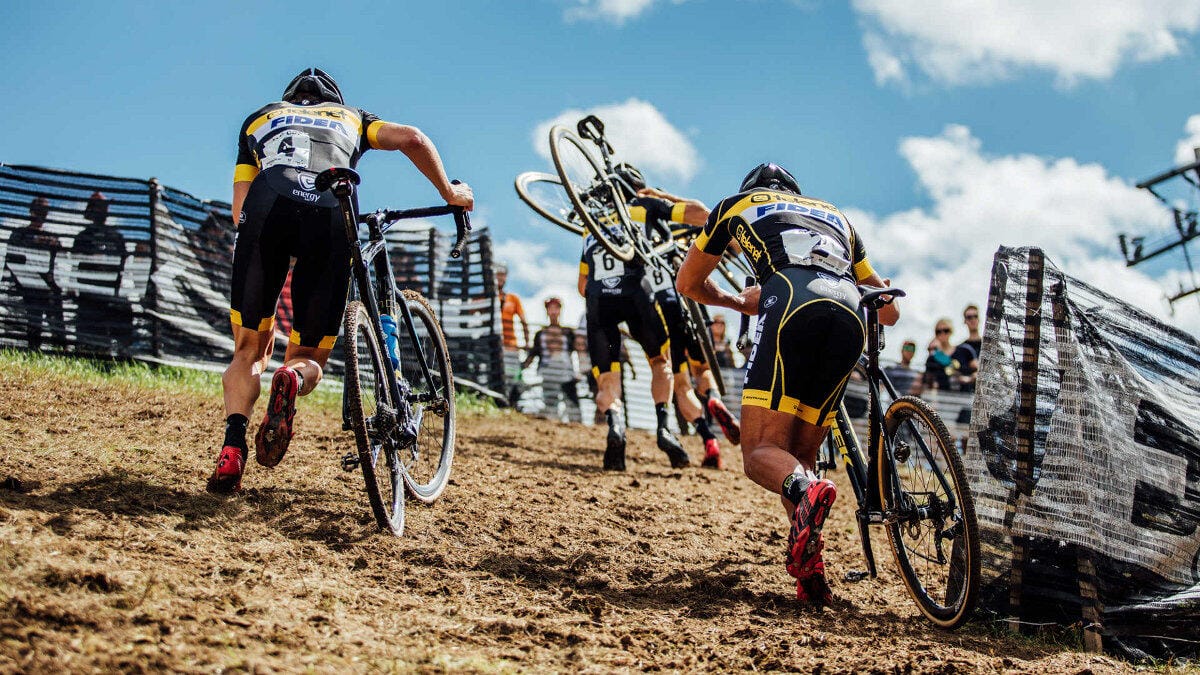
The cyclocross bike? – First, a little history…
In short: A cyclocross bike – or in German, cross-country bike – looks like a racing bike with wide tires and is the predecessor of the mountain bike, and the idea is almost 100 years old!
Mountain bikes only arrived in Europe in the 1980s, but that doesn’t mean nobody cycled in winter before then. At the beginning of the last century, almost all cycling enthusiasts were road cyclists. But what did a road cyclist do on winter roads back then, with bumpy surfaces, wet cobblestones, and at best dim dynamo lighting? Either don’t ride or find an alternative. Back then, road bikes were still made of steel, so with a little tinkering and a welding machine, a solution was quickly found: take an old road bike frame and fit wide, knobby tires. To make them fit through the brakes, the narrow road brake had to be removed, and cantilever brake bosses were added. And there you have it: the cyclocross bike , perfect for training off-road – the first mountain bike was born!
But cyclists are cyclists, and so it didn’t remain just training bikes for long. Races and specially designed bikes for this purpose emerged as early as the 1920s. In the 1960s and 70s, thousands in Germany also became enthusiastic about this new sport, which was held on short circuits with obstacles that forced riders to dismount or jump over them. German riders like Rolf Wolfshohl, Klaus-Peter Thaler, and Mike Kluge, with their world championship titles in this category, contributed to a veritable boom in off-road cycling even before the invention of the mountain bike.


Leave a Reply